

Here’s a list comparing 10 major cultural, social, and media achievements by Black Americans around 1995 with what has not been experienced or has notably declined in the last 30 years. Each entry pairs a notable achievement/trend from the past with its present-day absence or change.


30 Years Later: What Have We Done?
Exploring the 30-year gap in Black prosperity across culture, leadership, entertainment, and economics.
In the late 20th century, Black America led cultural revolutions with iconic boy bands, groundbreaking R&B singers, family sitcoms, and sports legends—defining a powerful era of Black prosperity and influence.
Since the Million Man March, many signs point to a stall and decline: fading mainstream Black-led entertainment, shrinking Black ownership, cultural distractions, and diminishing social and economic leadership.
From dwindling boy bands and sitcoms to cultural trends that focus on superficiality and low self-esteem, the last 30 years have shown a troubling retreat in genuine Black prosperity and innovation.
Understanding the past is critical to building a new path forward—one that revives authentic Black wealth, leadership, and cultural influence through innovation, new organizations, and empowered communities.
The Golden Era: Black Excellence in the 1990s
The Shift: Where Did We Go Wrong?
Signs of Decline: Reflecting on Lost Ground
Looking Ahead: What Can Be Done?
PART 1 of 10
Comparison Table of Black Achievements: Then vs. Now
Mid-1990s Achievements
Past 30 Years—What’s Missing or Faded
Dominance of Black-led boy bands (Boyz II Men, Jodeci)
No mainstream Black boy bands since mid-’00s [1]
Blockbuster Black family sitcoms—“Sanford & Son,” “Martin,” “The Wayans Bros.”
Few/no major Black family sitcoms on prime-time TV [1]
Surge in network debuts with Black casts (UPN, WB)
Major U.S. networks pivoted away from Black-led casts [1]
Chart-topping R&B/soul acts (Mary J. Blige, D’Angelo)
Classic R&B heavily overshadowed by pop/trap
Black directors in major Hollywood releases (Spike Lee, Singleton, “Bad Boys”)
Lower share of Black directors in major blockbusters [1]
Neo-soul movement (“Brown Sugar,” Lauryn Hill)
Neo-soul genre virtually absent from charts
Black tap dance innovation (“Bring in ‘da Noise, Bring in ‘da Funk”)
No tap-based Black performance art in mainstream culture [1]
Cross-cultural pop/rap collabs (Mariah Carey x Ol’ Dirty Bastard)
Genre fusion less frequently promotes Black innovation
Multiple Black-led buddy cop/action franchises
Very few Black buddy-franchise movie launches
Regular emergence of new Black sports icons (Jordan, Tyson, Williams)
Iconic Black sports superstars less covered for broader cultural impact
R&B girl groups dominating radio (TLC, Total, Xscape)
No mainstream Black female vocal groups currently
Full-length Black soundtracks topping charts (“Waiting to Exhale”)
Rare for Black-led soundtracks to chart or define pop sounds
Blockbuster Black-led romantic dramas (“Waiting to Exhale”)
Scarcity of big-budget Black romantic features [1]
National TV dance shows like “Soul Train”
Absence of all-Black national dance showcases
Deep radio airplay for Black gospel, jazz, blues
Traditional Black music genres have limited mainstream airplay
Mass-market Black magazines (e.g., Ebony, Vibe)
Drastic fall in Black-owned publication reach
Young Black poets and writers on bestseller lists
Fewer Black poets/writers achieve wide acclaim
Unapologetically Black styling/fashion on red carpets
Less “Afrocentric” fashion in mainstream awards
Socially charged Black sitcoms (Fresh Prince, Living Single)
Few sitcoms take on social/racial issues directly [1]
Network competition for Black viewership (Fox, WB, UPN)
Streaming platforms rarely prioritize Black series launches
Community-centered Black radio talk shows
Community focus replaced with nationalized radio formats
Wide Black influence on TV commercials and advertising
Reduced Black representation in mainstream ads
Black superstars headlining international ad campaigns
Fewer global ad campaigns championing new Black icons
Rapid rise of Black pop sensations (Brandy, Monica)
Few new Black artists reach pop megastar status quickly
Frequent Black innovation in youth streetwear trends
Major brands less likely to launch trends from Black creators
Celebrated Black-led TV awards (Soul Train Awards, NAACP)
Broadcast decline/reduced hype for Black award shows
This list captures cultural spaces where Black creativity once defined the mainstream but has faded or been replaced by new, less Black-led formats over the last three decades [1].
Citations:
[1] 30 Black Culture Milestones from 1995 That Shaped History https://iloveus.media/2025/09/03/1995-at-30-the-black-albums-films-and-tv-that-shaped-the-culture/
[2] African-American culture https://en.wikipedia.org/wiki/African-American_culture
[3] ASALH – The Founders of Black History Month https://asalh.org/black-history-themes/
[4] A Timeline of Important Events in Black History https://www.collegexpress.com/interests/education/blog/timeline-important-events-black-history/
[5] African American history timeline – Students https://kids.britannica.com/students/article/African-American-history-timeline/625406
[6] Black History Month https://en.wikipedia.org/wiki/Black_History_Month
[7] Notable Black Americans who helped change the world https://abc7news.com/post/black-history-month-2025-famous-americans-helped-change-united-states-world/14404708/
[8] Country comparison tool https://www.theculturefactor.com/country-comparison-tool
[9] 2025 Making History NOW! Black History Month Series https://www.uticachildrensmuseum.org/about/news/2025-making-history-now-black-history-month-series/
ENTERTAINMENT CHANNEL
Live Entertainment content
ADD CHANNELS TO YOUR HOME SCREEN
ENTERTAINMENT CHANNEL




Related Channels:
 30 Years Later: What Have We Done?
 Soulja Boy
 Black Consumer Power: The Untold Story Behind the Revival of American Brands
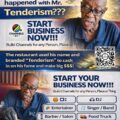 Black People, Stop Getting Tenderismed
 Happy Black History Month: How Technology Has Transformed Black History, Black Power, and Black Futures
 Black People, Stop Getting Tenderismed
There’s a new word floating around the internet:
Tenderismed.
It’s not just about barbecue.
It’s not just about a viral moment.
It’s about something deeper.
It’s about what happens when someone’s personality, culture, creativity, or likeness becomes profitable — but they don’t own the profit.
And that story is not new.
Black People, Stop Getting Tenderismed
There’s a new word floating around the internet:
Tenderismed.
It’s not just about barbecue.
It’s not just about a viral moment.
It’s about something deeper.
It’s about what happens when someone’s personality, culture, creativity, or likeness becomes profitable — but they don’t own the profit.
And that story is not new.
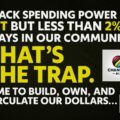 The Black Trillion-Dollar Trap: Why Less Than 2% Of Black Spending Power Stays In The Black Community
 Inventions Agent Network
 The lack of REPRESENTATION OF BLACK PEOPLE IN TECH.
 Urban Business Showcase | 100 Neighborhood Business Ideas
 How Much Are Fortune 500 Companies Allocating to Black-Owned Businesses in Their Advertising Budgets?
 Black Market Las Vegas Channel
 Black Wealth: 30 Years Stuck in Neutral | Channels.biz
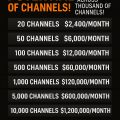 Secure Your Ad Space
 Black Inventions That Changed the World
 Project 2025’s Hemp Ban: What Black Entrepreneurs, Farmers, and Advocates Need to Know
 Popular Black Hairstyles: Afro
 McDonald’s Settles Byron Allen’s $10B Lawsuit: A Turning Point for Black-Owned Media and Fortune 500 Advertising
 Taurus
 South Africa Channel
 Aquarius
 How did Prohibition affect the black community
 Why Would Channels.biz and Club Kids Inc. Give Away $1 Million Every Month—Forever?
 Invasions of the Turtles – Las Vegas – Channels.biz
 B.O.T. Dashboard
 Empowering Urban Communities: Surviving and Thriving in the Trump Administration Project 2025″
 Trump tariffs and the effect on the black community
 Fashion Agent Network
 Food Agent Network
 Part 2 — How Black America Survived the Great Depression | Channels.biz
 Black Market Milwaukee (seasonal)
 Why It Feels Like AI Models Are Getting Worse With Each Upgrade — A Comprehensive Look
 Black Unemployment Surges Under Trump Administration, Sparking Economic and Social Concerns
 Breaking Barriers: How Channels.biz Aims to Change the Face of AI, Startups, and Wealth Creation
 From Ultra Sheen to Web3: How George E. Johnson Sr.’s Legacy Lives On Through Channels.biz
 Cornrows
 The Million Man March at 30: Reclaiming Unity, Purpose, and Digital Power | Channels.biz
 San Diego California
 Finger Waves Hairstyles
 Senior’s Agent Network
HOME
Senior’s Agent Network
HOME
 Venture Capital Funding in 2025: Where the Money Goes—And Guess Who’s Left Behind
 In Living Color
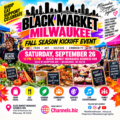 Black Market Milwaukee Fall 🍂 Kickoff 🍁 Dessert 🍪 Wars
 Red Lobster: How Another White Corporation Used Black People to Turn Its Fortunes Around
 Animals Agent Network
 Adult (Only) Agent Network
 Entertainment Agent Network
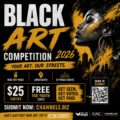 CAC Black Art Competition 2026
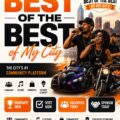 Best of the Best of My City | Pull-Up Pop-Up Tour
 Libra
Libra
 Philadelphia PA
 Black Business in America: By the Numbers and On the Road to 1 Million
 Dr Umar Johnson
 CAMPAIGN NAME:”Be the Face of Las Vegas – Limited Sponsorship Offer!”
My City Channels Black Market Milwaukee
CAMPAIGN NAME:”Be the Face of Las Vegas – Limited Sponsorship Offer!”
My City Channels Black Market Milwaukee
 Phoenix AZ
 Black Roots & Family Ties Traced Back to New Orleans
Travel Agent Network
Black Roots & Family Ties Traced Back to New Orleans
Travel Agent Network
 Celebrating my achievements in #Milwaukee, Club Kids Inc.…
 Stevie Wonder
 Nonprofit Agent Network
 Danielle Spencer (Memorial)
 Marcus C. Duke CEO/CTO AI AGENT01 Channel (DEMO)
 How Black America Rebuilt: From the Great Depression to the New Deal | Channels.biz
Rising from the Ban: Black Innovation in a Post-Hemp Economy
How Black America Rebuilt: From the Great Depression to the New Deal | Channels.biz
Rising from the Ban: Black Innovation in a Post-Hemp Economy
 Sagittarius
 Family Agent Network
MyCityChannels Agent Network
LGBT+Q Agent Network
Family Agent Network
MyCityChannels Agent Network
LGBT+Q Agent Network
 Gayle King
 Education Agent Network
 San Antonio Texas
Scorpio
Capricorn
San Antonio Texas
Scorpio
Capricorn
 Houston Texas
 AI AUTO B.O.T. Avatar Generator
 Leo
Leo
 Virgo
Virgo
 Pisces
 Business Agent Network
 Jobs Agent Network
 Marijuana Agent Network
 Law Agent Network
 Money Agent Network
 Auto Agent Network
 Teen Agent Network
 Gemini Agent Network
 Agent Network Dashboard
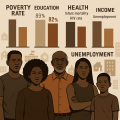 Persistent Disparities Facing Black Americans in the United States
 Los Angeles
 Barber Shops
 New York, NY.
 Channels.biz Reaches First 100 Fortune 500 Companies in Ambitious Push for Inclusive Digital Advertising
 The Long Road Forward: How Black America Turned Survival into a Movement | Channels.biz
 Why Is Support So Hard to Find? Examining the Challenges Facing Black-Owned Businesses and Community Initiatives
 Welcome to the Global Competition Channel — Powered by Channels.biz!
 Sell Some, Give One
 Provider Dashboard (MM)
 Arts, Crafts & DIY Network