

Some of the links in this article are "affiliate links", a link with a special tracking code. This means if you click on an affiliate link and purchase the item, we will receive an affiliate commission.



The price of the item is the same whether it is an affiliate link or not. Regardless, we only recommend products or services we believe will add value to our readers.
By using the affiliate links, you are helping support our Website, and we genuinely appreciate your support.
Part 2 — How Black America Survived the Great Depression
Against all odds, Black America built systems of survival. Faith, creativity, unity, and an unbreakable sense of community turned despair into endurance and poverty into purpose.
The Rise of Black Mutual Aid and Cooperative Power
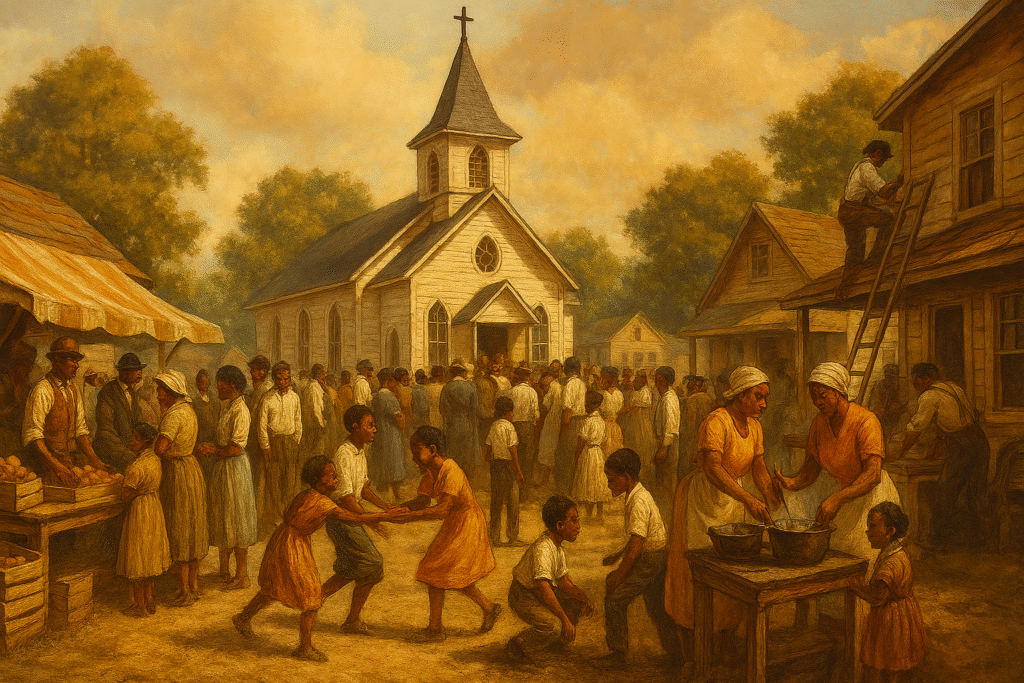
When government relief failed, Black communities built their own safety nets. Mutual aid societies, church groups, and local cooperatives became lifelines. From Harlem to Birmingham, Black barbers, teachers, and church leaders organized food drives, rent funds, and informal banks that kept neighborhoods afloat.
Groups like the National Urban League and the NAACP not only fought for jobs and fair wages, but also taught financial literacy and self-help economics. These efforts planted the seeds of what would later evolve into the cooperative economics movement known as “Ujamaa”—a principle that still echoes in today’s Black business networks.
Black Women Led the Survival Effort
Black women became the backbone of resilience. They formed neighborhood kitchens, ran sewing circles, and found ways to stretch scarce resources to feed families. Many worked as domestic laborers, cleaning homes, cooking, and caring for children of wealthier families—while still organizing at home for their own communities.
In Harlem, groups like the Housewives League of Detroit and the National Council of Negro Women encouraged Black consumers to buy from Black-owned businesses, giving rise to one of the earliest “Buy Black” movements in history.
The Birth of Black Media and Expression
Even in the hardest years, creativity never died. Black newspapers like the Chicago Defender and Pittsburgh Courier became voices of truth and hope, spreading stories of resilience and opportunity. Jazz and blues artists—Louis Armstrong, Bessie Smith, Duke Ellington—turned pain into rhythm and rhythm into income.
Through art, music, and writing, the Black experience during the Great Depression became not just a story of struggle, but of transformation and identity. Harlem’s creative boom gave the world a glimpse of a culture that refused to be broken.
Faith as Foundation
Churches were more than places of worship—they were community command centers. Pastors preached hope, while congregations organized food programs, education drives, and advocacy meetings. The church became the foundation of Black political and economic organizing, laying the groundwork for the Civil Rights movement that would follow.
Economic Innovation in the Shadows
When doors were closed, Black entrepreneurs built new ones. Informal economies—bartering, community lending, and underground businesses—thrived quietly. Beauty salons, jazz clubs, and small grocers served as both income sources and safe spaces for planning, expression, and survival. This underground economy kept money circulating inside the community long after the broader system failed them.
Legacy of Survival
The lessons learned from that era became part of Black America’s cultural DNA: self-reliance, entrepreneurship, and collective power. Out of crisis came innovation. The same spirit that carried families through the 1930s would power the Civil Rights movement, the rise of HBCUs, and later economic independence campaigns.
Survival wasn’t just about getting through—it was about building a foundation for future generations to thrive.
From Depression to Digital Power: Today, Black entrepreneurship continues that same legacy through platforms like Channels.biz, empowering creators to build digital ownership and global impact using AI, Web3, and blockchain technology. The tools have changed, but the mission remains the same: survival through self-determination.
Keywords: Great Depression, Black survival, mutual aid, cooperative economics, Black business, Harlem Renaissance, Channels.biz #BlackHistory, #EconomicSurvival, #CooperativeEconomics, #BlackResilience, #GreatDepression, #ChannelsBiz