
Analyzing the Disheartening Reality: The Worst School Districts in America in 2026
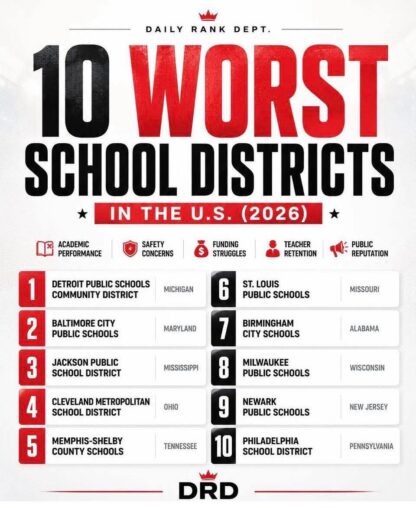
As education remains a cornerstone of societal progress, the alarming performance of certain school districts has come into sharper focus. In 2026, Detroit, Baltimore, Jackson, Cleveland, Memphis-Shelby, St. Louis, Birmingham, Milwaukee, Newark, and Philadelphia emerged among the lowest-ranked school districts in the United States. This investigative piece aims to dissect the underlying factors contributing to these dismal rankings while also highlighting some community-led initiatives that exhibit potential for lasting change.
### **Systemic Causes of Low Performance**
The reasons for the poor performance of these school districts are manifold, deeply rooted in systemic issues that have persisted for decades. One significant factor is funding inequality. Many schools in these areas receive considerably less funding than their counterparts in affluent neighborhoods, creating disparities that are felt in every aspect from classroom resources to extracurricular activities. The reliance on local property taxes for school funding perpetuates a cycle where economically disadvantaged areas struggle to provide quality education, thereby limiting the opportunities available to their students.
Additionally, teacher shortages exacerbate this issue. In many of these districts, it is common to find classrooms led by underqualified or inexperienced teachers, with schools often unable to attract and retain skilled educators. The daunting working conditions—rife with overcrowded classrooms, lower salaries, and limited administrative support—further alienate potential candidates. The result is an educational environment that cannot effectively engage students or meet their diverse learning needs.
### **Safety Concerns and Their Impact on Education**
Safety concerns within these neighborhoods significantly influence school efficacy. Rising incidents of violence and crime, both in and around school grounds, create an environment of fear and instability that is detrimental to learning. Students facing such challenges often struggle to concentrate on their studies, and many parents feel compelled to withdraw their children from public schools in favor of alternatives that they perceive as safer, even when those alternatives may be financially infeasible.
This phenomenon not only affects immediate classroom performance but also tarnishes the long-term perception of these districts. Negative public sentiment about safety can lead to a dramatic drop in enrollment, which ultimately reduces resources and funding further, creating a vicious cycle that is hard to escape.
### **The Role of Political and Economic Disinvestment**
Decades of political and economic disinvestment have played a central role in shaping the educational landscape of these districts. With diminishing public and private investment, many schools face challenges that require more effective management and infrastructural support. Schools that could have benefitted from updated facilities, technological advancements, and comprehensive mental health services often find themselves ill-equipped to meet the needs of their communities.
Compounding these issues is often a lack of political will or initiative to implement sweeping reforms necessary for meaningful change. Local and state governments may prioritize other projects over educational funding, further entrenching the barriers to improvement that students in these districts face daily.
### **Community-Led Initiatives as Beacons of Hope**
Despite these entrenched issues, it is essential to recognize local success stories and community-led initiatives that are making strides toward improvement. Grassroots organizations, parent-teacher associations, and community groups have taken it upon themselves to foster educational opportunities and programs. Examples include after-school tutoring initiatives, mentorship programs, and partnerships with local businesses aiming to provide internships and vocational training.
In Philadelphia, for instance, community organizations have introduced programs focused on literacy and arts, garnering local investment and interest in education. Similarly, in Detroit, companies and nonprofits have collaborated to offer STEM programs that cater to underserved students, demonstrating the community’s resilience and commitment to creating pathways for future generations.
### **Toward Systemic Change: A Forward-Looking Perspective**
To reverse the troubling trends characterized by these school districts, a multifaceted approach is necessary. First, there must be a commitment to equitable funding models that prioritize the most disadvantaged areas, ensuring schools have the resources to provide a high-quality education. This includes not only increasing financial support but also establishing mechanisms for sustained investment in infrastructure.
Furthermore, addressing teacher shortages through competitive salaries, enhanced training programs, and improved working conditions is vital to attracting and retaining talented educators. Changing the educational landscape also involves rebuilding public trust by prioritizing safety within schools and making community input a core aspect of district-level decision-making.
In summary, while the challenges faced by the worst-performing school districts are significant and multifaceted, they are not insurmountable. By addressing systemic issues head-on and investing in community-driven solutions, there exists potential for reinvention and revitalization in these schools—and, by extension, their communities.
Hashtags: #EducationReform #SchoolFunding #TeacherShortage #CommunityInitiatives #SafeSchools #PublicEducation #FutureOfEducation