
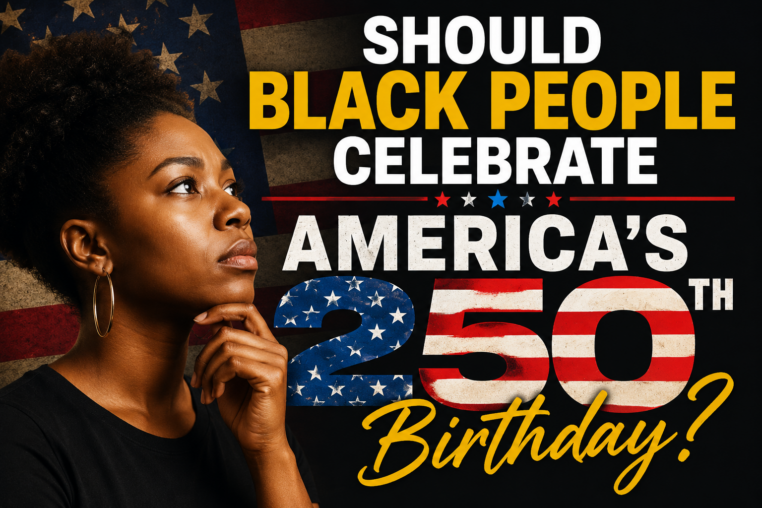
## Should Black Americans Celebrate America’s 250th Birthday?
As the United States approaches its 250th anniversary in 2026, the question of whether Black Americans should join in the celebrations looms large. This milestone invites reflection on the nation’s progress, the challenges that persist, and how we define patriotism and freedom in a country still grappling with its history. For many Black Americans, this celebration can be a fraught affair, layered with the weight of historical injustices and contemporary struggles for equality. This article explores the complex intersection of history, identity, and national pride as America reaches this significant juncture.
### **The Complexity of Patriotism**
Patriotism is often declared by waving flags and singing anthems, but for many Black Americans, these symbols hold different meanings. The flag that represents freedom and democracy to some has, throughout history, also symbolized oppression and exclusion for others. How can one celebrate a nation that has historically marginalized their communities? This sentiment has sparked debate: should the 250th anniversary be an occasion for celebration, or is it a moment best marked by reflection and critique? Many argue that true patriotism does not require blind allegiance but encourages questioning and challenging the status quo. Thus, Black Americans may view this anniversary as an opportunity to assert their rightful place in the nation’s narrative—one that is equal parts celebration and critique.
### **A Legacy of Contributions**
Black Americans have been integral to the fabric of American history, contributing to its development economically, culturally, and politically. From the labor of enslaved ancestors who toiled in fields to the contemporary entrepreneurs reshaping various sectors, their contributions are woven into every aspect of American life. As the nation prepares to celebrate its 250th birthday, it is crucial to acknowledge this legacy. The stories of resilience, creativity, and resistance offer a counter-narrative to the dominant narratives that often exclude Black experiences. This recognition could transform how the anniversary is perceived, turning what could be seen as a mere celebration into a comprehensive acknowledgment of struggles and triumphs. For Black Americans, the chance to claim and share their history is an essential aspect of any discussion about festivities.
### **The Ongoing Fight for Equality**
For many, the struggle for civil rights and equality is far from over. The legacy of slavery, Jim Crow laws, and systemic racism has created disparities in almost every aspect of life, including healthcare, education, and the criminal justice system. As the nation prepares for this anniversary, it is vital to confront these issues head-on rather than glossing over them in favor of celebration. Can a country fully enjoy its birthday without addressing the pains and injustices that many of its citizens continue to experience? For Black Americans, the answer is likely no. Consequently, any discussion around the 250th birthday must encompass a commitment to make real progress toward equity, justice, and healing—ensuring that all citizens feel they have a stake in the nation’s future.
### **A Moment for Honest Dialogue**
Rather than framing the question of celebration in binary terms of acceptance or rejection, America’s 250th anniversary can serve as a catalyst for a deeper national dialogue. It presents an opportunity to discuss a broad array of topics: What does freedom mean in 2026? Who is included in America’s story? Can patriotism coexist with criticism? And what would true progress entail over the next 250 years? These questions are essential in understanding how Black Americans relate to the notion of celebration. In many ways, the heart of the issue lies not in whether Black Americans should celebrate but in whether the nation is ready to embrace a full, nuanced understanding of its history—one that acknowledges both achievements and failures.
### **Conclusion: A Path Forward**
As the United States gears up for its 250th birthday, the conversations surrounding the event invite introspection rather than mere celebration. This anniversary has the potential to transcend fireworks and parades by prompting a collective reflection on history, identity, and the ongoing journey toward equality. For Black Americans, the opportunity lies in recognizing their indispensable role in crafting the nation’s narrative—not just within the context of struggle, but as vital contributors shaping America’s future. Ultimately, the acknowledgment of deep-seated issues alongside celebrations of achievement may form the truest expression of patriotism as the nation marches forward.
Hashtags: #AmericanHistory #BlackVoices #CivilRights #Patriotism #250thAnniversary #SocialJustice #CulturalHeritage